Beschreibung
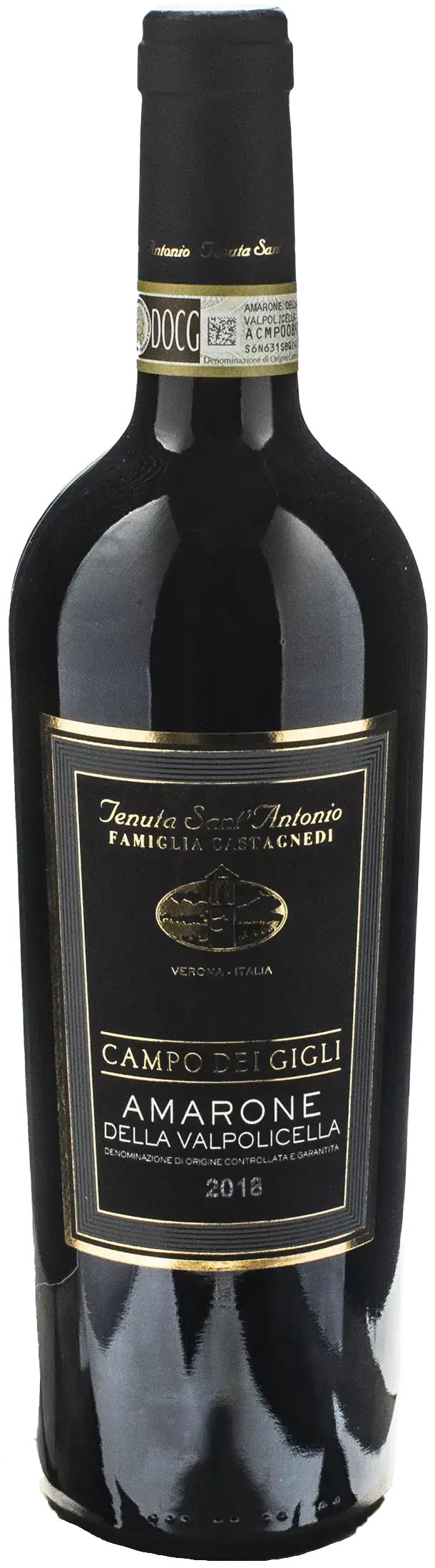
The history of Amarone Campo dei Gigli from Tenuta Sant’Antoniobegan in the 1980s, when the four Castagnedi brothers decided to produce a quality wine on their family’s lands, opting for low-yield vineyards and manual grape selection rather than industrial production. The decision to focus on quality over quantity has rewarded the Castagnedi family’s commitment; over the years, Amarone Campo dei Gigli from Tenuta Sant’Antonio has received numerous national and international awards and recognitions. This wine is made from five grape varieties: the main ones are Corvina and Corvinone, followed by Rondinella, Croatina, and Oseleta. These vineyards are located in San Zeno di Colognola ai Colli, in the began in the 1980s, when the four Castagnedi brothers decided to produce a quality wine on their family’s lands, opting for low-yield vineyards and manual grape selection rather than industrial production. The decision to focus on quality over quantity has rewarded the Castagnedi family’s commitment; over the years, Amarone Campo dei Gigli from Tenuta Sant’Antonio has received numerous national and international awards and recognitions. This wine is made from five grape varieties: the main ones are Corvina and Corvinone, followed by Rondinella, Croatina, and Oseleta. These vineyards are located in San Zeno di Colognola ai Colli, in the Monti Garbi, in the heart of Valpolicella. These lands have a reputation among local growers for being difficult to cultivate. Garbi, in fact, means sour in the local dialect, and it takes a great deal of skill to produce something unique here. The bunches are hand-selected, and only those with sparse clusters—that is, well-separated grapes—are allowed to enter the winemaking process. Amarone della Valpolicella, one of the most important wines from the Scaligeri region, requires two months of fermentation followed by three years of aging in fine oak barrels. According to many experts, the best bottles are those that are over 15 years old., in the heart of Valpolicella. These lands have a reputation among local growers for being difficult to cultivate. Garbi, in fact, means sour in the local dialect, and it takes a great deal of skill to produce something unique here. The bunches are hand-selected, and only those with sparse clusters—that is, well-separated grapes—are allowed to enter the winemaking process. Amarone della Valpolicella, one of the most important wines from the Scaligeri region, requires two months of fermentation followed by three years of aging in fine oak barrels. According to many experts, the best bottles are those that are over 15 years old.